Shikakuu
Barcelona, Spain
Lookiluz
Finding Warmth in a Perfect Square
SHIKAKU began with one of the simplest geometric forms imaginable—a square.
Inspired by the quiet elegance of the traditional Japanese Andon, the project explores how light can shape an atmosphere through simplicity rather than ornamentation. The Andon has illuminated Japanese homes for centuries, creating calm and intimate spaces with nothing more than a simple frame, paper, and light.
Initially, the lamp was intended to be called ANDON. However, as the project evolved, we decided to move away from the increasingly common use of Japanese words simply because they sound exotic. Instead, we searched for a name that described the object itself.
The result was SHIKAKU, the Japanese word for square. The name reflects the project's true identity—a celebration of pure geometry rather than cultural symbolism.
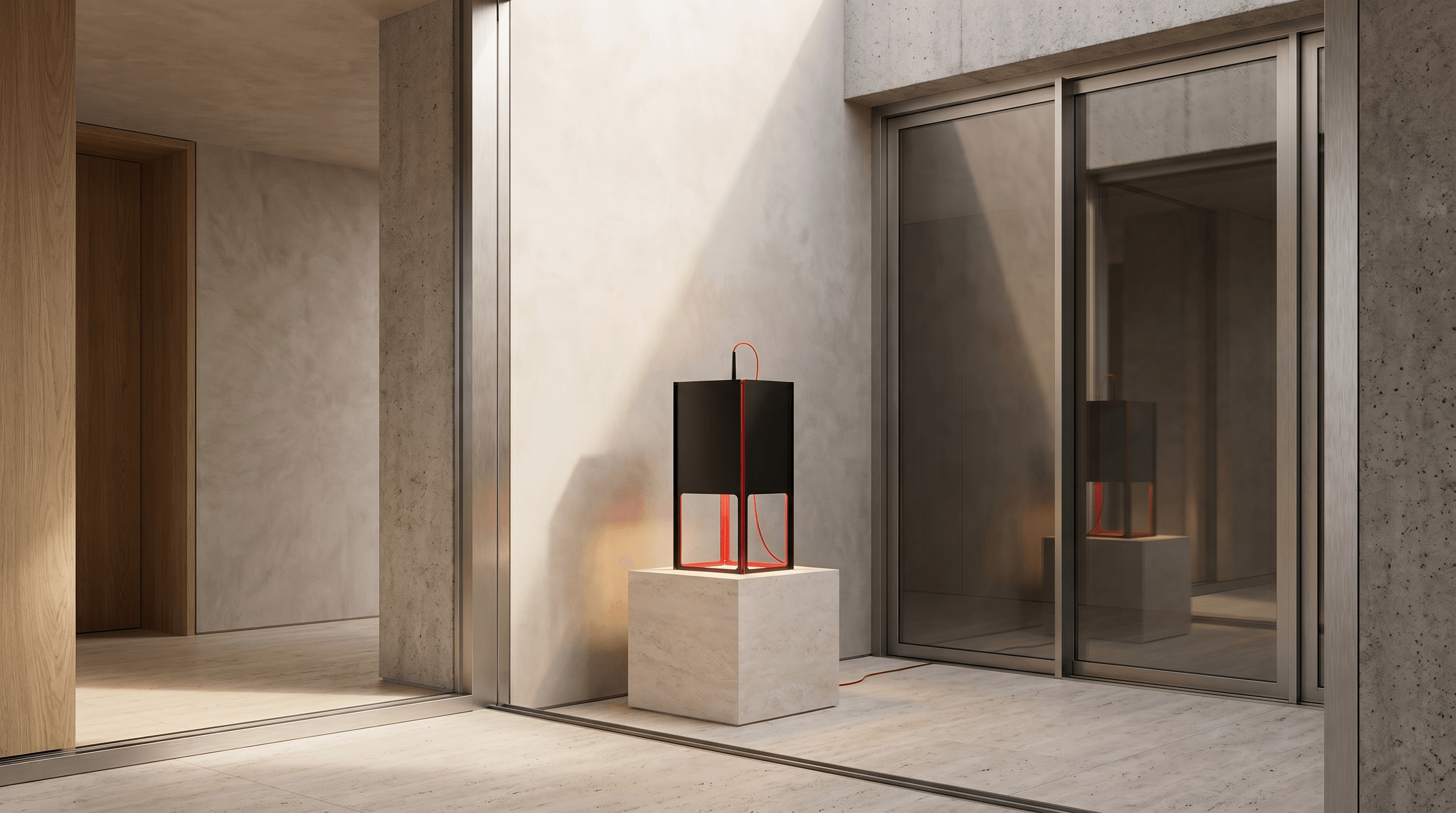
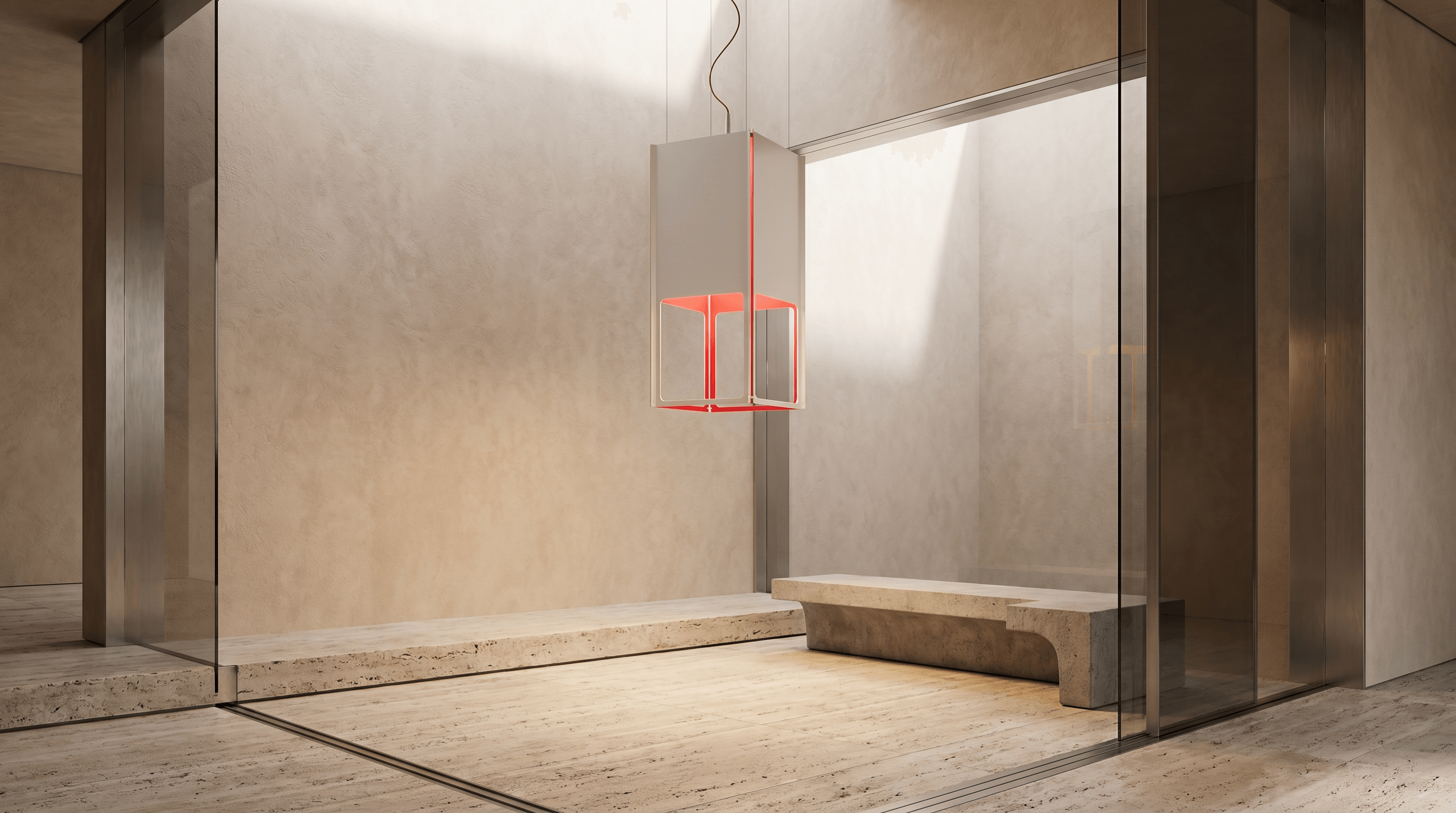
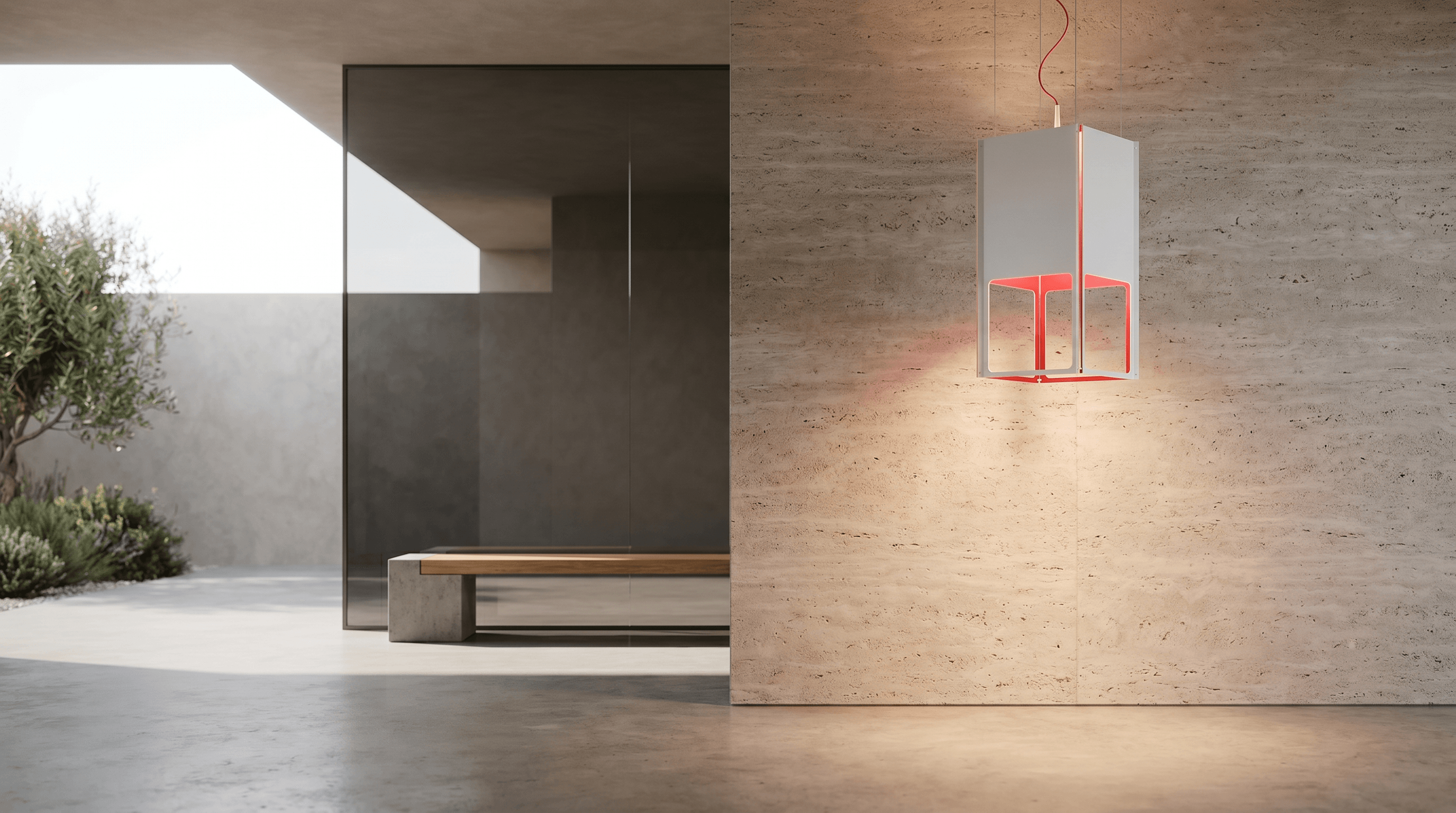
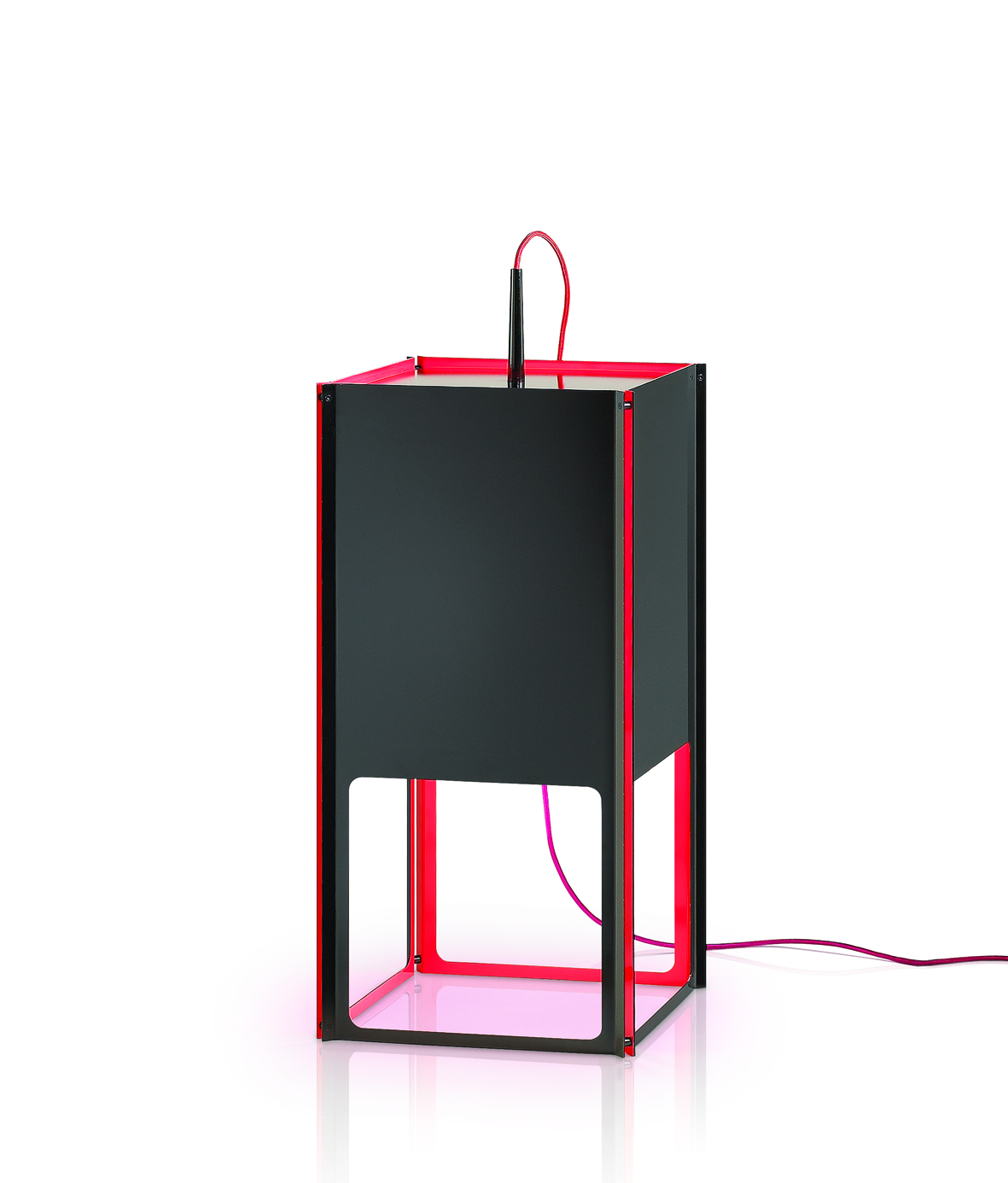
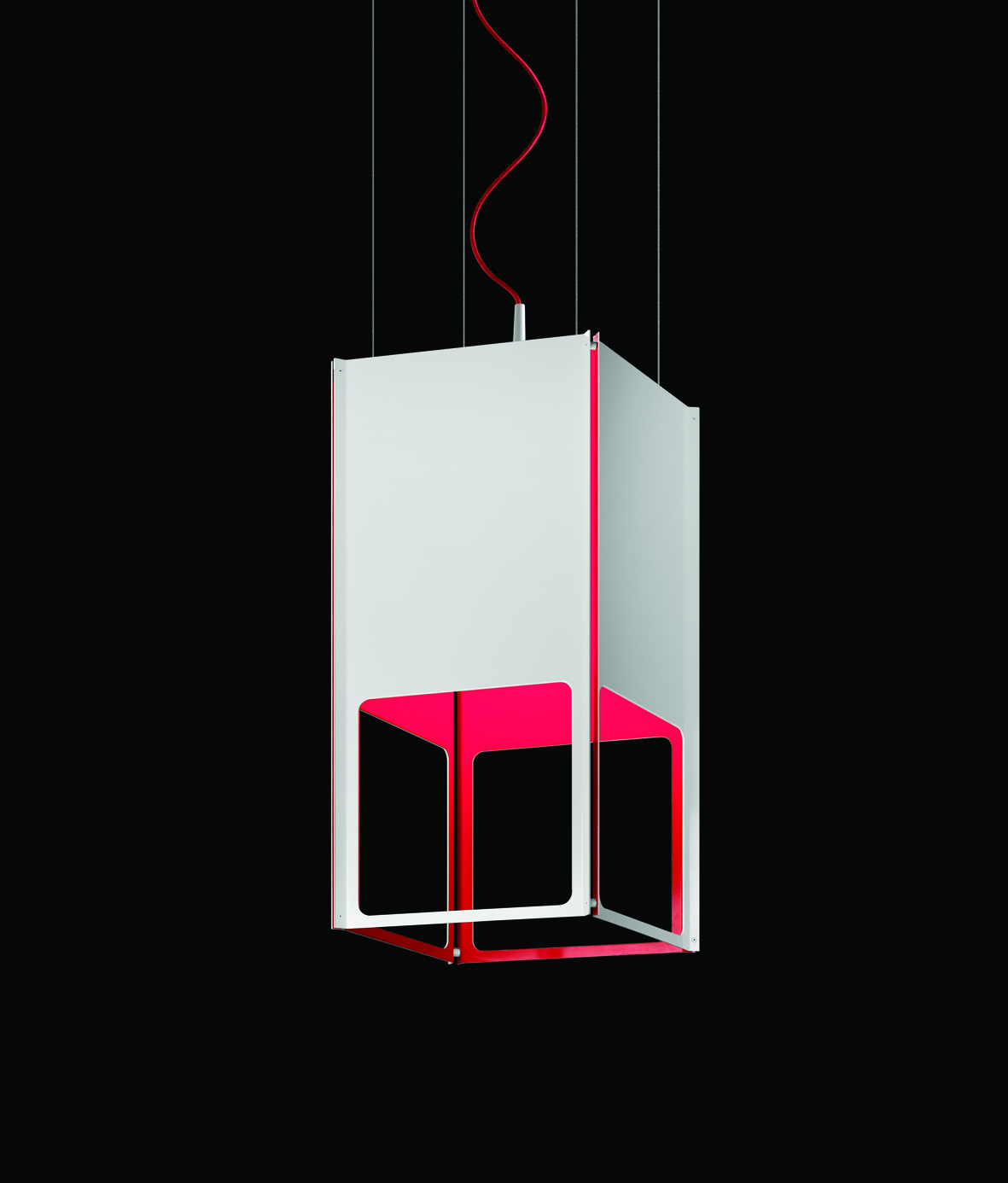
From the outside, SHIKAKU appears almost anonymous. Four perfectly proportioned metal panels come together to form a simple cuboid with clean architectural lines. There are no decorative elements, no unnecessary details, and no visual distractions.
Its character only begins to reveal itself once the light is switched on. Each of the four steel panels is painted in either black or white on the exterior, while the interior is finished in a vibrant red. This hidden color transforms the quality of the emitted light, producing a surprisingly warm glow that gently escapes through the narrow openings between each panel.
The red interior becomes invisible as a painted surface, yet remains visible through light itself.
Instead of seeing the color directly, the user experiences it through atmosphere.
At the same time, the open bottom of the lamp provides a direct beam of illumination, allowing SHIKAKU to function equally well as ambient lighting and as practical task lighting above dining tables, kitchens, or workspaces. The construction follows the same philosophy of reduction.
The entire lamp is assembled from four identical folded metal panels, significantly simplifying manufacturing, assembly, tooling, and inventory. Repetition becomes both an aesthetic language and a manufacturing strategy, allowing a visually refined object to be produced with remarkable efficiency. SHIKAKU demonstrates that simplicity is not the absence of design—it is often the result of removing everything that is unnecessary until only the essential remains.
The final object quietly integrates into its surroundings during the day, yet transforms the atmosphere as evening falls. Through the subtle relationship between geometry, color, and light, SHIKAKU creates an experience that feels warm, intimate, and unexpectedly emotional despite its rigorous architectural form.
More personally, SHIKAKU represents an important milestone in the history of HTDS. It was the first product designed by Hiroshi Tsunoda to enter mass production, marking the beginning of a journey that would eventually lead to hundreds of products manufactured and distributed around the world. The project remains a reminder that the simplest ideas, when executed with clarity and purpose, often become the most enduring.